
ACL Surgeon Perth
Sports Injury Management
Sport puts your body through its paces, and sometimes, it pushes it past its limits. Whether you've twisted your knee on the football field, felt something give way mid-run, or been dealing with persistent pain that just won't settle, I'm here to help you get back to doing what you love.
My approach is built around getting you the right diagnosis quickly, a treatment plan that makes sense for your level of activity, and a recovery pathway that gives you the best chance of returning to full function.
Before I was a surgeon, I was a physiotherapist. That background means I understand exactly what return-to-sport demands, not just what it takes to heal but what it takes to perform again.
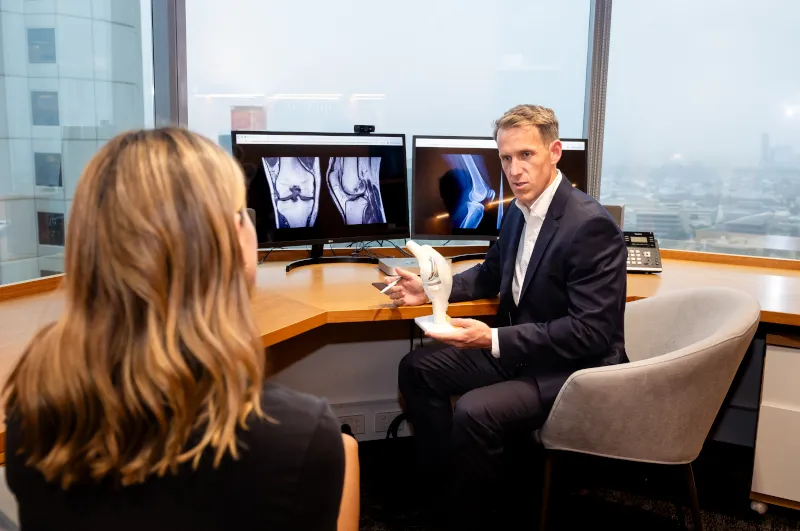
I consult at Subiaco Private Consulting Rooms and St John of God Midland, and operate at Hollywood Private Hospital, Bethesda Health Care, St John of God Subiaco, St John of God Mt Lawley, and St John of God Midland. Referrals from across the Perth metro area and regional WA are welcomed.
Dr David Kerr
Sports Injury Management Perth
Conditions I Treat
ACL, Meniscus, Multi-Ligament
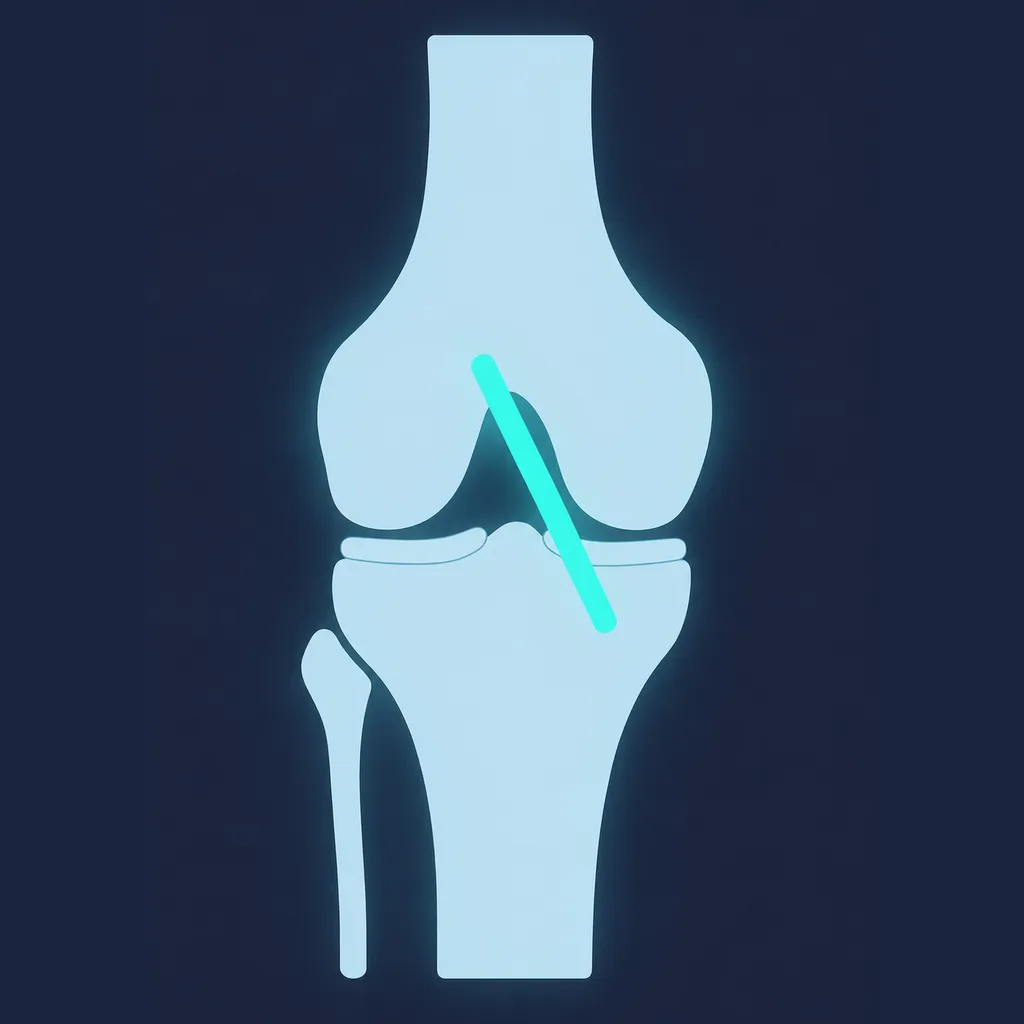
ACL Reconstruction
Complete tears of the anterior cruciate ligament. I offer a range of graft options, selected to match your anatomy, age, and return-to-sport goals.
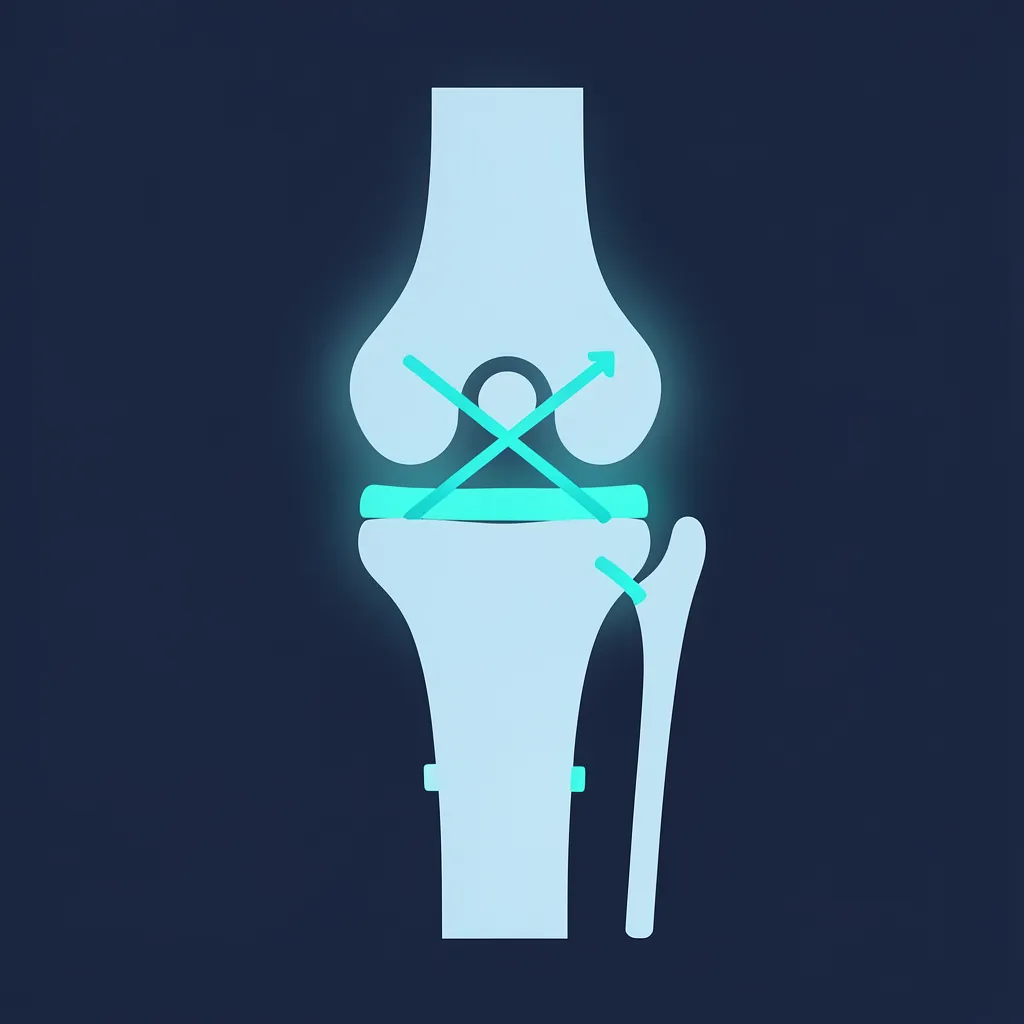
Multi-Ligament Repair
Combined injuries involving the PCL, ACL, MCL or LCL. These complex cases need staged surgical planning and careful, coordinated rehabilitation.

Meniscal Repair
Tears in the knee's shock-absorbing cartilage. Wherever tissue quality allows, I take a repair-first approach to preserve as much of the meniscus as possible.
Patellofemoral Care
Recurrent instability or dislocation of the kneecap. Treatment ranges from targeted physiotherapy through to MPFL reconstruction, tailored to your anatomy.
Cartilage Restoration
Damage to the articular cartilage lining the joint. Joint-preserving options are available for active patients wanting to stay ahead of arthritis.
My Approach
24-Hour Acute Review Perth
Surgery isn't always the answer, and when it is, the timing and technique matter as much as the decision itself. I work closely with your physiotherapist or sports medicine physician to ensure every decision is made in the right context. If surgery is the right path, I'll explain exactly what to expect, what the evidence shows, and what your recovery timeline looks like in practical terms.
All referrals for acute sports injuries are reviewed within 24 hours.
Surgical Techniques
ACL Graft Options & Repair-First
Where surgery is indicated, I use minimally invasive techniques to reduce tissue disruption and support faster recovery. For ACL reconstruction, I offer multiple graft options, selected based on your individual anatomy, age, activity level, and return-to-sport goals.
What to Expect After Sports Injury Surgery
Recovery from sports injury surgery varies depending on the procedure, an ACL reconstruction follows a very different timeline to a meniscal repair. What stays consistent is my approach: I'll give you a clear, realistic picture of your recovery before you go into theatre, and I'll stay involved throughout.
Most patients are weight-bearing within days of surgery, with a structured rehabilitation program beginning shortly after. Return-to-sport timelines are guided by your functional progress, not just the calendar, I'll work closely with your physiotherapist to make sure each stage of your recovery is well-supported.
For ACL reconstruction, most patients return to sport between nine and twelve months post-surgery, depending on graft choice, rehabilitation adherence, and the demands of your sport. I'll discuss what that timeline looks like for you specifically during your consultation.
Sports Injury Clinic Perth
Urgent Referral Pathway
When you're dealing with an ACL tear or an acute knee injury, you need answers quickly — not in six weeks. I review every referral within 24 hours, because getting the right care early changes outcomes."
Dr David Kerr
Sports Injury Management Perth
Frequently Asked Question
Who is the best ACL surgeon in Perth?
"Best" is a fair question, but it isn't really one I can answer for you, because the right surgeon depends on your specific injury, your sport, and your recovery goals. What I can tell you is what to look for.
An ACL surgeon should be fellowship-trained in sports knee surgery, comfortable with multiple graft options rather than a one-technique-fits-all approach, and ideally accessible. Before I was a surgeon, I was a physiotherapist, which shapes how I think about return-to-sport, not just surgical reconstruction. I run multiple graft options (hamstring, patellar tendon, quadriceps tendon), review every acute sports injury referral within 24 hours, and operate across Hollywood Private, Bethesda, SJOG Subiaco, SJOG Mt Lawley, and SJOG Midland.
Book a consultation and we'll talk through what's right for your knee.
How much does ACL surgery cost in Perth?
Private health insurance typically covers ACL reconstruction in Australia, so most of my patients are out-of-pocket only for the surgical excess on their policy and any gap on the implant or theatre fees. The exact out-of-pocket depends on your insurer, your level of cover, and your excess.
If you don't have private health cover, ACL reconstruction can be self-funded, but the theatre and implant costs are significant. I always recommend getting a quote before making a decision.
For a personalised estimate, contact my rooms on admin@jointsolutions.com.au or (08) 9243 8133 and we'll send you a fee breakdown based on your situation.
How long does ACL reconstruction recovery take in Perth?
For most patients, the full return-to-sport timeline after ACL reconstruction is nine to twelve months, sometimes longer depending on the sport. The exact timeline depends on three things: graft choice, rehabilitation adherence, and the demands of your specific sport.
Most patients are weight-bearing within days of surgery and start a structured rehab program almost immediately. The first three months focus on range of motion and strength. Months three to six build sport-specific conditioning. Months six to nine are about progressive loading and testing. Months nine to twelve are return-to-sport testing and clearance.
I work closely with your physiotherapist throughout. I don't believe in arbitrary timelines, so your return depends on functional progress, not the calendar.
Do you treat meniscus tears without surgery in Perth?
Wherever possible, yes. I take a repair-first approach to meniscal tears, which means if the tear pattern and tissue quality allow, I preserve as much of the meniscus as I can rather than removing it.
Why this matters: the meniscus is the knee's shock absorber, and removing it (meniscectomy) significantly increases the risk of arthritis in that compartment over the following decade. Repair preserves the joint surface.
Not every meniscal tear is repairable. Some patterns, particularly in older patients or in degenerate tissue, are better treated with partial removal. The decision is made on imaging and intra-operative findings. If you have a meniscal tear and want a second opinion on whether repair is possible, my rooms can usually see you within a week.
Do you treat multi-ligament knee injuries in Perth?
Yes. Multi-ligament injuries (combined ACL, PCL, MCL, LCL damage, usually from high-energy trauma or a sporting collision) are one of the more complex knee problems I manage. They typically need staged surgical planning: addressing the most unstable ligaments first, then reconstructing the others in a second procedure once the initial repair has stabilised.
The knee often has associated vascular and nerve injuries that need to be ruled out before surgery. I work closely with vascular and plastics colleagues when needed.
If you've had a knee dislocation or a high-energy injury and your knee feels profoundly unstable, contact my rooms urgently. Acute multi-ligament injuries should be reviewed within 24 to 48 hours.
Where can I see a sports orthopaedic surgeon in Perth urgently?
For acute sports knee injuries, my rooms review every referral within 24 hours, every weekday. If your GP or sports physician has referred you, send the referral through Healthlink EDI jointsln and you'll be triaged the same day.
For self-referred patients with private health cover, you can call my rooms directly on (08) 9243 8133 or mobile 0447 282 067 to discuss urgent appointments. I consult at Subiaco Private Consulting Rooms and St John of God Midland Hospital, and I operate at Hollywood Private Hospital, Bethesda Health Care, St John of God Subiaco, St John of God Mt Lawley, and St John of God Midland.
For emergencies (locked knee, gross deformity, neurovascular compromise, inability to weight-bear), go to your nearest emergency department first.
Advice to GPs
Refer early for acute haemarthrosis or suspected ACL
If you've got a patient in your rooms today with a swollen, acutely injured knee, send the referral through now rather than waiting for the swelling to settle or for an outpatient MRI to come back. I review every acute sports injury referral within 24 hours, and the clinical picture is usually clearest in the first few days after injury, before effusion obscures the exam.
Early review also gives the patient a clear plan and a recovery timeline from day one, which is the bit they actually want when they've just blown out their knee on a Saturday. If you're not sure whether the injury is surgical, send the referral anyway. I can always say "non-operative, here's the rehab plan" on the first consult.
Pre-referral workup
A weight-bearing X-ray (AP, lateral, skyline) is the minimum pre-referral imaging for any acute knee injury. It rules out fracture, tibial plateau depression, and obvious degenerative change at minimal cost.
MRI is helpful but not essential before the first consult. If the patient can tolerate it and the local radiology has same-week availability, send it through with the referral (Healthlink accepts DICOM and report PDFs). If MRI is going to delay the referral by a week, just send the X-ray and I'll order the MRI myself on the first consult.
Functional assessment is the most useful clinical bit you can document: which movements hurt, can they squat, can they hop on the affected leg, is there a positive Lachman or pivot shift, any mechanical locking or catching. Five lines in your referral letter saves me ten minutes of history-taking.
Red flags for same-day or next-day review
Send any patient with the following straight through on Healthlink and call my rooms to flag urgency:
- Locked knee (unable to fully extend, mechanical block rather than pain)
- Gross instability on clinical exam (positive Lachman AND positive pivot shift, or multi-directional laxity)
- Suspected multi-ligament injury (high-energy mechanism, knee dislocation or near-dislocation)
- Inability to weight-bear beyond a few steps
- Neurovascular compromise (foot drop, absent pulses, cold or pale foot)
These patients need assessment within 24 hours, often surgical intervention within the first week. Don't sit on them waiting for outpatient MRI.
Patellofemoral instability / first-time dislocation
First-time patellar dislocations in adolescents and young adults are worth referring promptly rather than managing conservatively in the hope it doesn't happen again. The recurrence rate after a first dislocation is high (around 30 to 50 percent in the under-25s), and recurrent dislocations cause progressive cartilage damage to the medial patellar facet and the lateral femoral condyle.
I assess each patient on imaging (MRI to look for an osteochondral fragment, MPFL integrity, and trochlear morphology) and clinical exam (J-sign, patellar glide, apprehension). MPFL reconstruction is well-timed early in active patients with recurrent instability or high-risk features on first dislocation (large osteochondral fragment, severe initial injury, contralateral instability).
If you've got a young sportsperson with a patellar dislocation, send the referral through. The conversation about timing and surgical threshold is worth having sooner rather than later.
Meniscal tears in the active patient
For active patients with a meniscal tear on MRI, please refer early even if the symptoms are currently manageable. The reason is simple: repair is more likely to be possible in the first few weeks after injury, before the tear edges degenerate and the surrounding tissue quality drops.
Once the tear becomes chronic or the patient has had multiple dislocations, repair often isn't feasible and we're left with meniscectomy. That sounds minor but the long-term consequence is a 2x to 4x increased risk of compartment-specific arthritis over the following decade.
For patients who aren't surgical candidates (older, low-demand, comorbidities), conservative management with physiotherapy and monitoring is appropriate and I can supervise that remotely. But for the under-50 active patient with a repairable tear pattern, please send the referral through.
Where care is delivered
I consult at Subiaco Private Consulting Rooms (144 Churchill Ave, Subiaco WA 6008) and at St John of God Midland Hospital (1 Clayton St, Midland WA 6056). Both have on-site parking and are accessible from the Perth metro and northern suburbs.
I operate at five hospitals across Perth:
- Hollywood Private Hospital (Nedlands) — primary site for ACL and sports knee work
- Bethesda Health Care (Claremont) — orthopaedic and surgical hub
- St John of God Subiaco Hospital — established private surgical hospital
- St John of God Mt Lawley Hospital — convenient for northern suburbs patients
- St John of God Midland Public and Private Hospitals — same-site public and private access
Patients from regional WA are welcomed. If you're referring from a rural practice and the patient needs assistance with travel or accommodation logistics, mention it in the referral letter and my rooms will help coordinate.